A mare who can no longer carry a pregnancy is not, for all that, at the end of her breeding career.
OPU-ICSI makes it possible to collect her oocytes, fertilise them in the laboratory, and entrust the pregnancy to another mare. It is the technique that has changed our work most over the past ten years, and we now perform it at La Giguellerie.
Is your mare a good candidate? A prior examination is all it takes to find out.
What actually happens
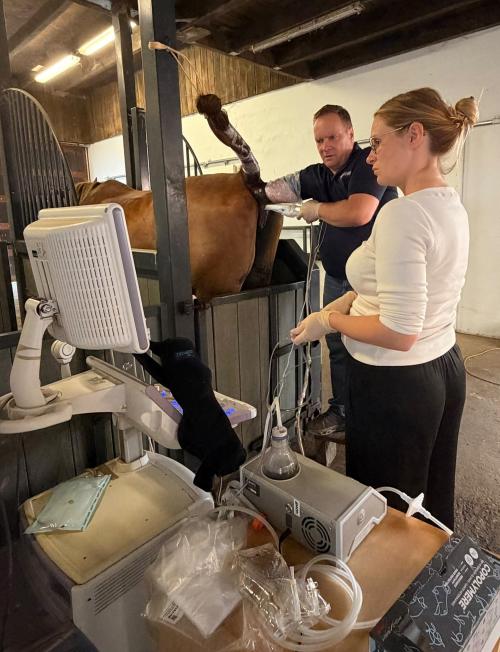
The oocyte is the cell a mare releases at each ovulation. In conventional insemination it is fertilised in the oviduct, and the embryo then travels down into the uterus. Everything that follows therefore depends on the quality of that uterus.
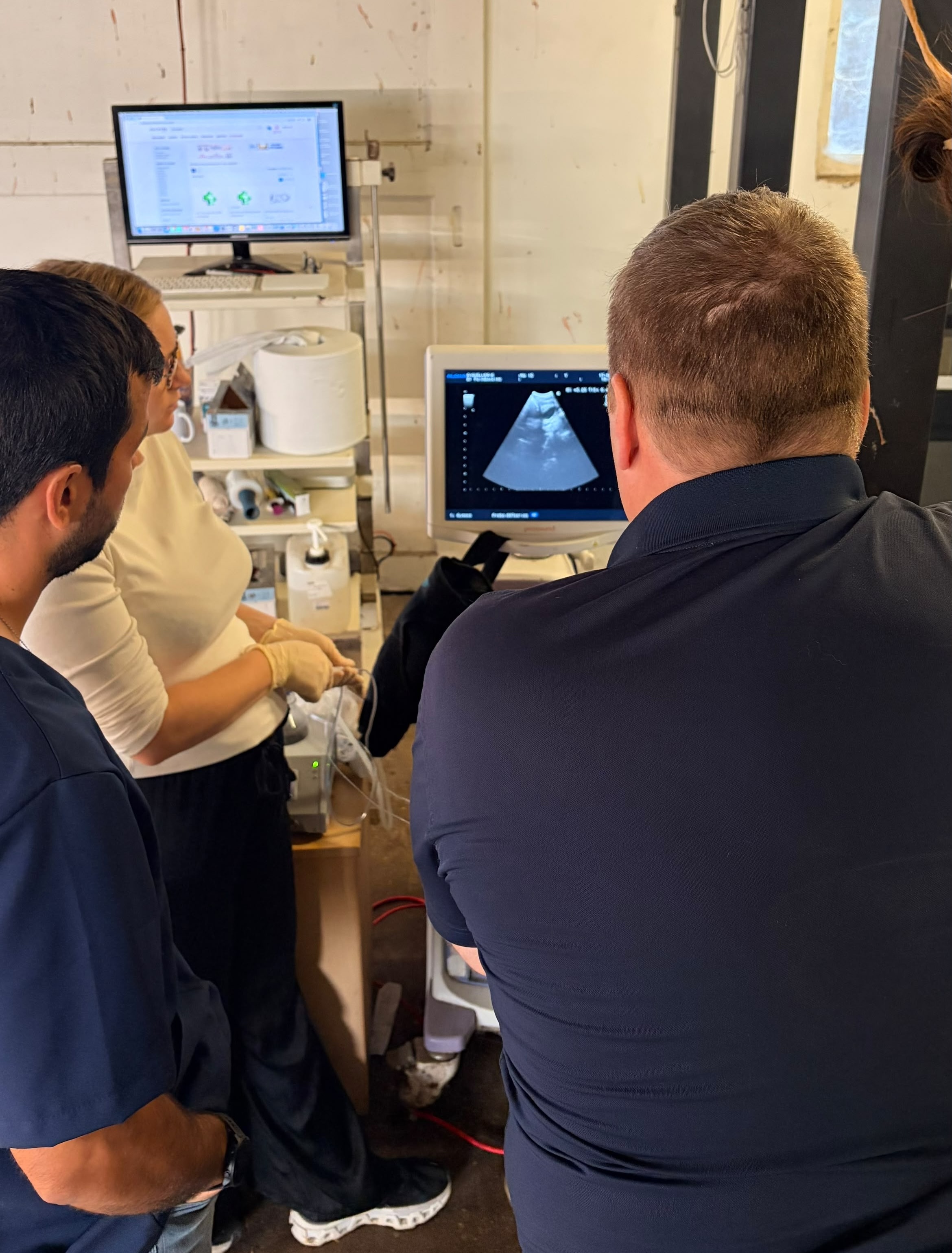
With OPU-ICSI we collect the oocytes directly from the follicles, before ovulation. This is the aspiration, or OPU, for Ovum Pick-Up. It is performed transvaginally, under ultrasound guidance, with the mare standing and sedated.
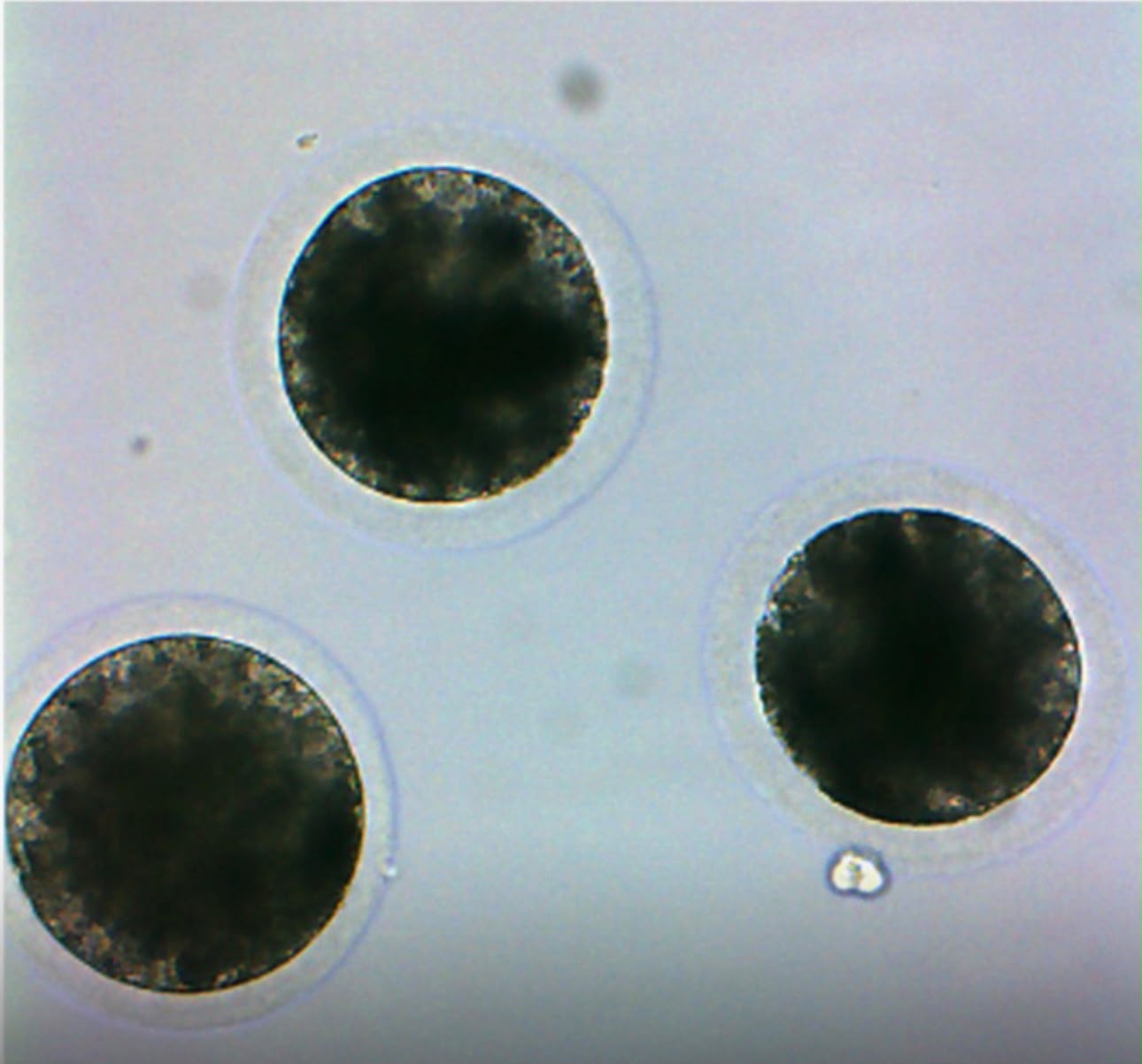
The oocytes then travel to the laboratory. They spend about twenty hours in an incubator to complete their maturation. Only those reaching metaphase II, meaning ready to be fertilised, can go further.
Then comes ICSI, intracytoplasmic sperm injection. Under the micromanipulator, the operator selects a single sperm cell and injects it into the oocyte. One is enough. That is the whole difference from insemination, which requires millions, and it is what makes the technique valuable when semen is scarce or of poor quality.
The embryos then develop in culture for seven to ten days. Those reaching the blastocyst stage are frozen, and they wait for you.
Which mares it suits
The first indication is the mare whose uterus can no longer carry a pregnancy. Endometrial lesions, adhesions, a cervix that no longer closes. In her case insemination no longer works, and conventional embryo transfer fails as well, since an embryo must still form in place before it can be flushed. OPU-ICSI bypasses the uterus from start to finish.
The older mare often falls into the same category. Her oocytes remain fertilisable long after her uterus has ceased to be a viable environment. Yields decline with age, more markedly after twenty, but they do not fall to zero.
Then there is the mare in work. An aspiration takes a single day and interrupts nothing. Your mare can therefore produce embryos during her competition season, and you decide later when those embryos become foals.
Finally there is the question of semen. A deceased stallion with three straws left, a stallion that is subfertile when frozen, a batch with poor post-thaw motility. Since one intact sperm cell per oocyte is enough, ICSI gives a second life to semen that would otherwise have been written off.
Why freezing changes everything
An embryo obtained through ICSI does not have to be transferred the same day. It is frozen, and it waits.
That means you choose the moment. You can produce in winter and transfer in spring, or spread several embryos across several years.
Above all it means you choose the recipient. Many breeders prefer to use one of their own mares, one they know and keep at home, rather than renting a surrogate. That is possible, and it is often cheaper.
When to aspirate
All year round, including in winter.
Mares that are not cycling often carry a greater number of small aspirable follicles, which makes winter worthwhile. Their oocytes mature slightly less well, however, so the final number of embryos remains broadly comparable from one season to another. The transitional periods, autumn and late winter, are the most favourable.
The advantage of winter is therefore mainly practical. We work when the mare has nothing else to do, without encroaching on her breeding season or her competitions.
A day with us
Your mare arrives on the day of the aspiration. We sedate her, the procedure is performed standing in the stocks and takes a little under an hour. She leaves again the same day.
The search for the oocytes follows immediately, here on site, so the cells do not spend hours waiting in the follicular fluid.
For your mare, then, everything takes place here in Mettet. She makes no long journey and stays nowhere.
The first news comes about a week later, then over the following days as the embryos reach the blastocyst stage and are frozen.
- The day of the aspiration
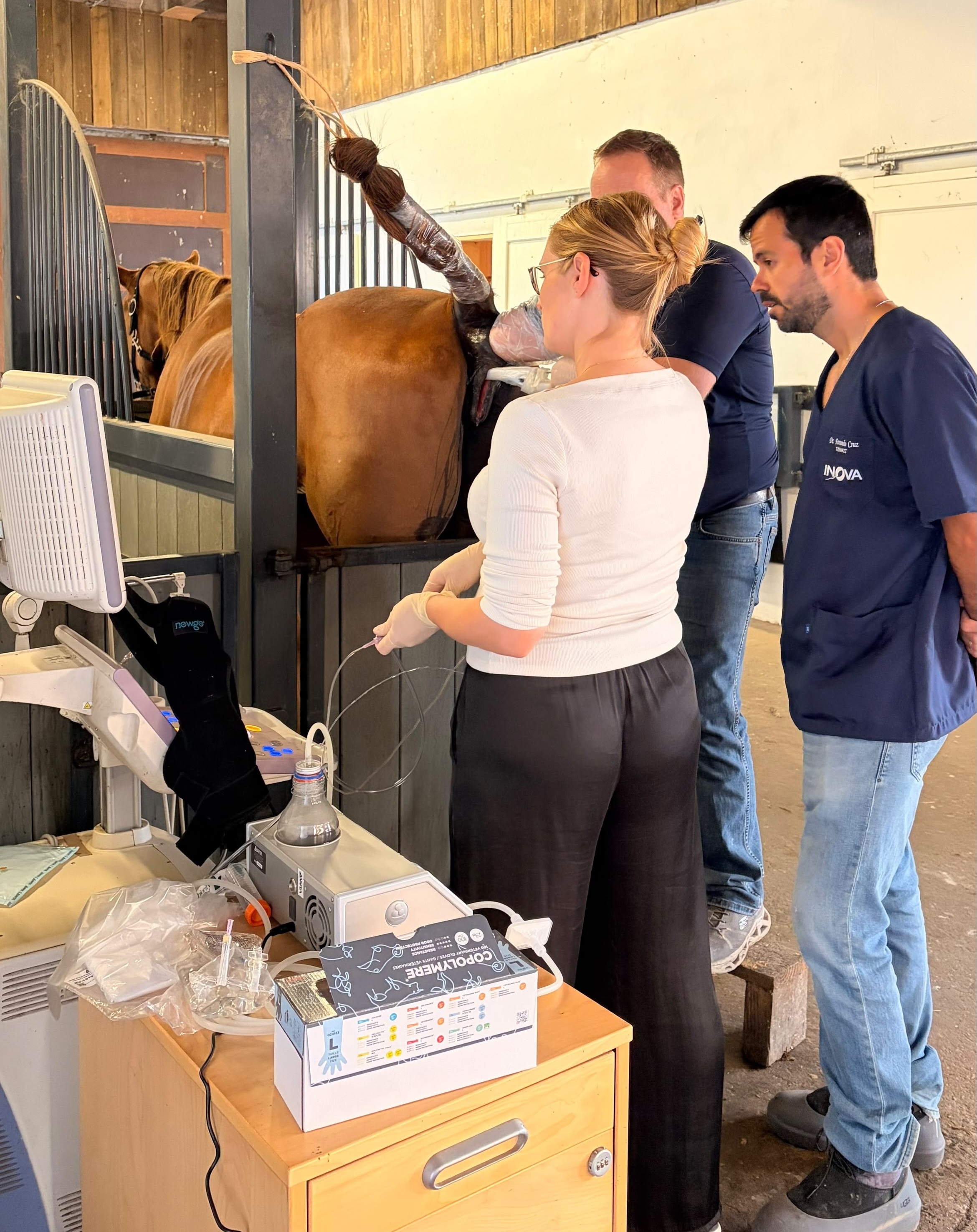
Aspiration
Follicles from both ovaries are aspirated and flushed. Not all of them yield a recoverable oocyte.
- Within the following minutes
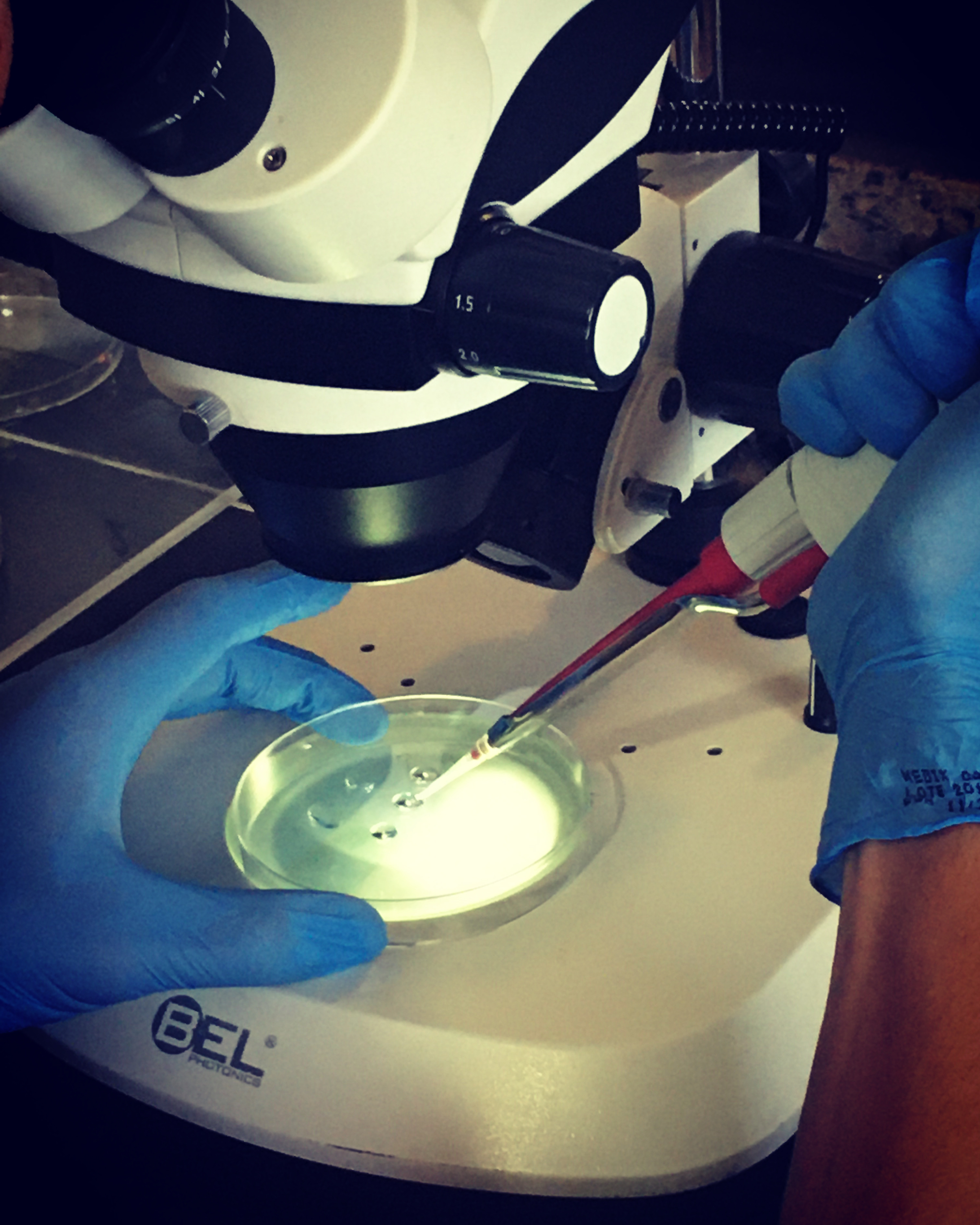
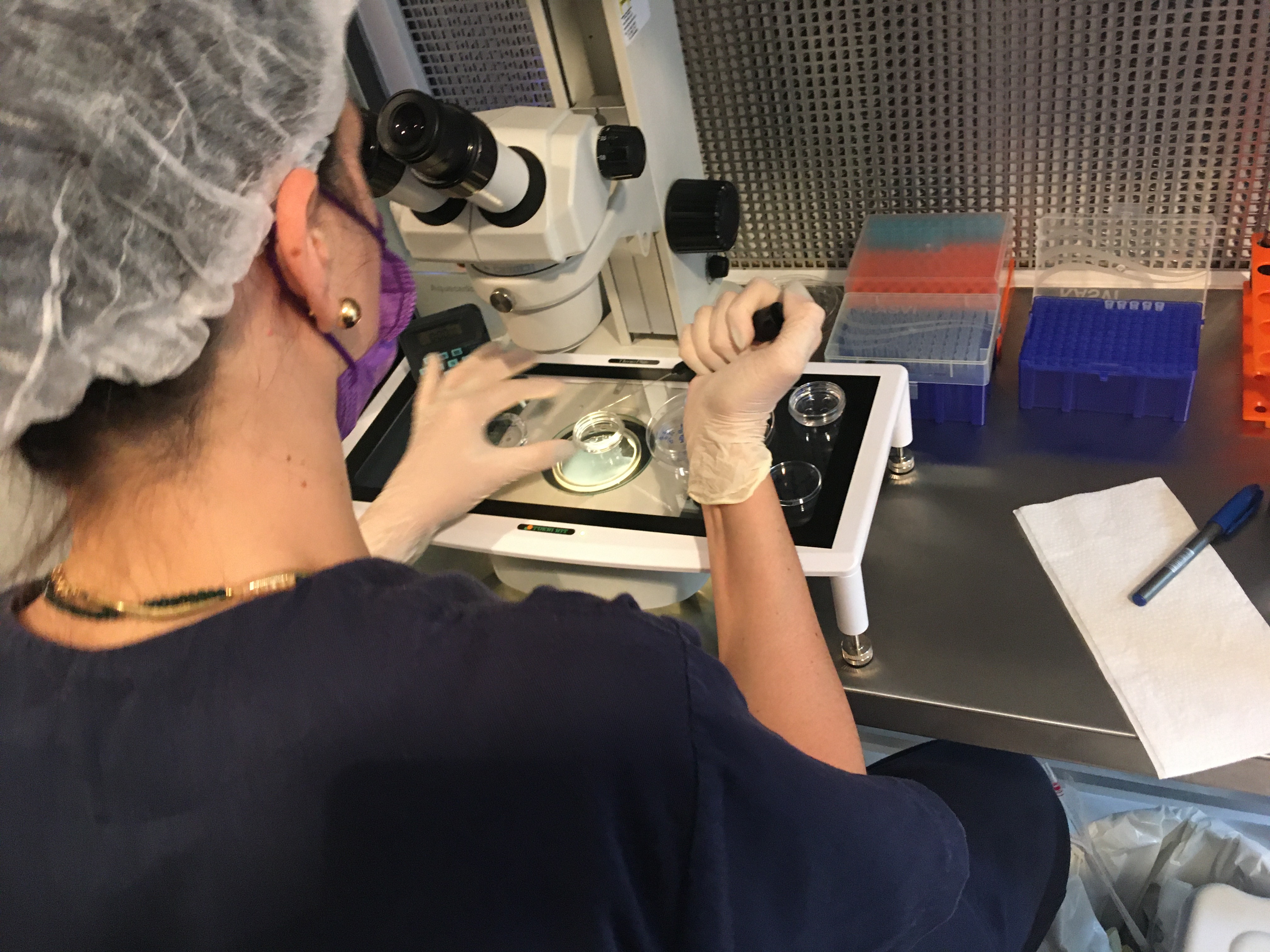
The search for oocytes
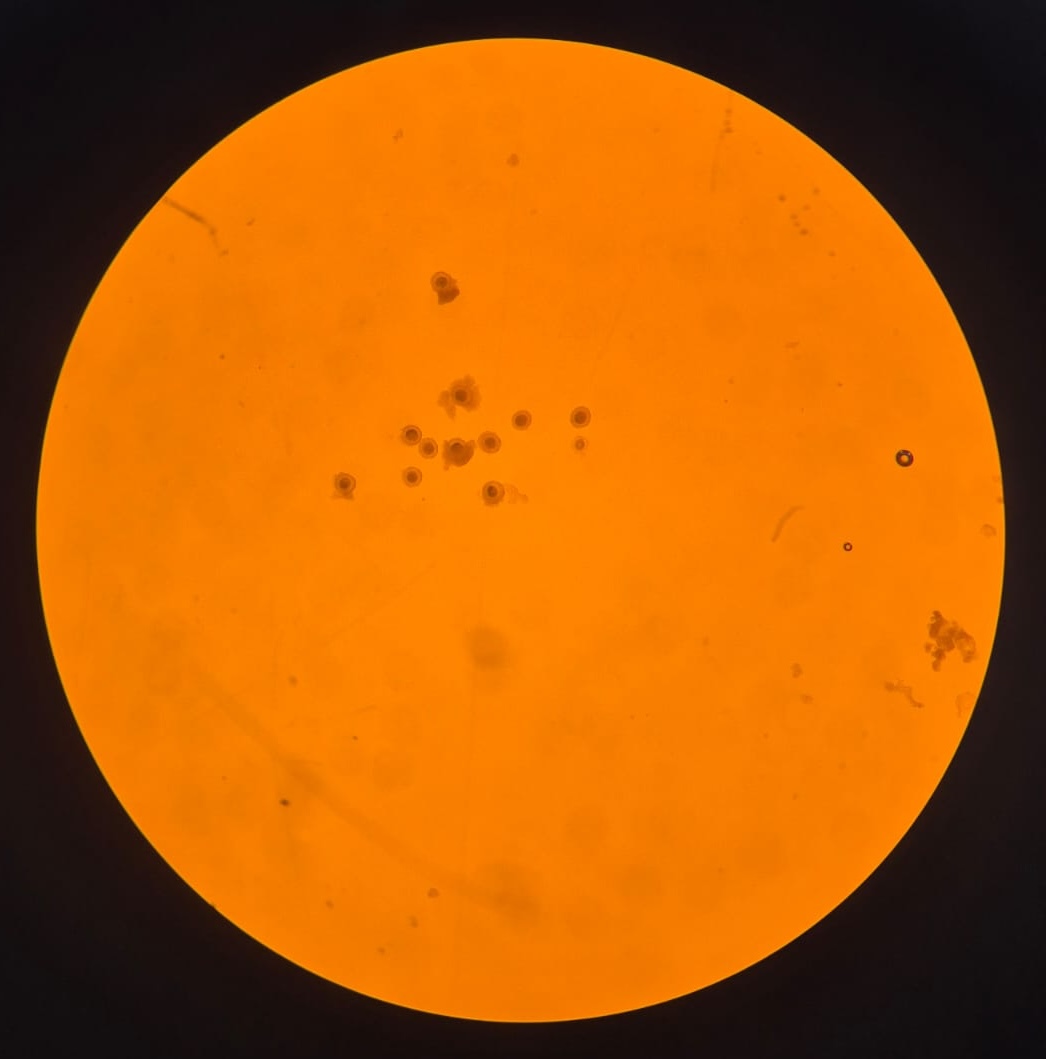
The follicular fluid is filtered and then examined under magnification. Each oocyte is identified, washed, and prepared for travel. This is a meticulous step, and we perform it right here, without waiting.
- At the end of the day
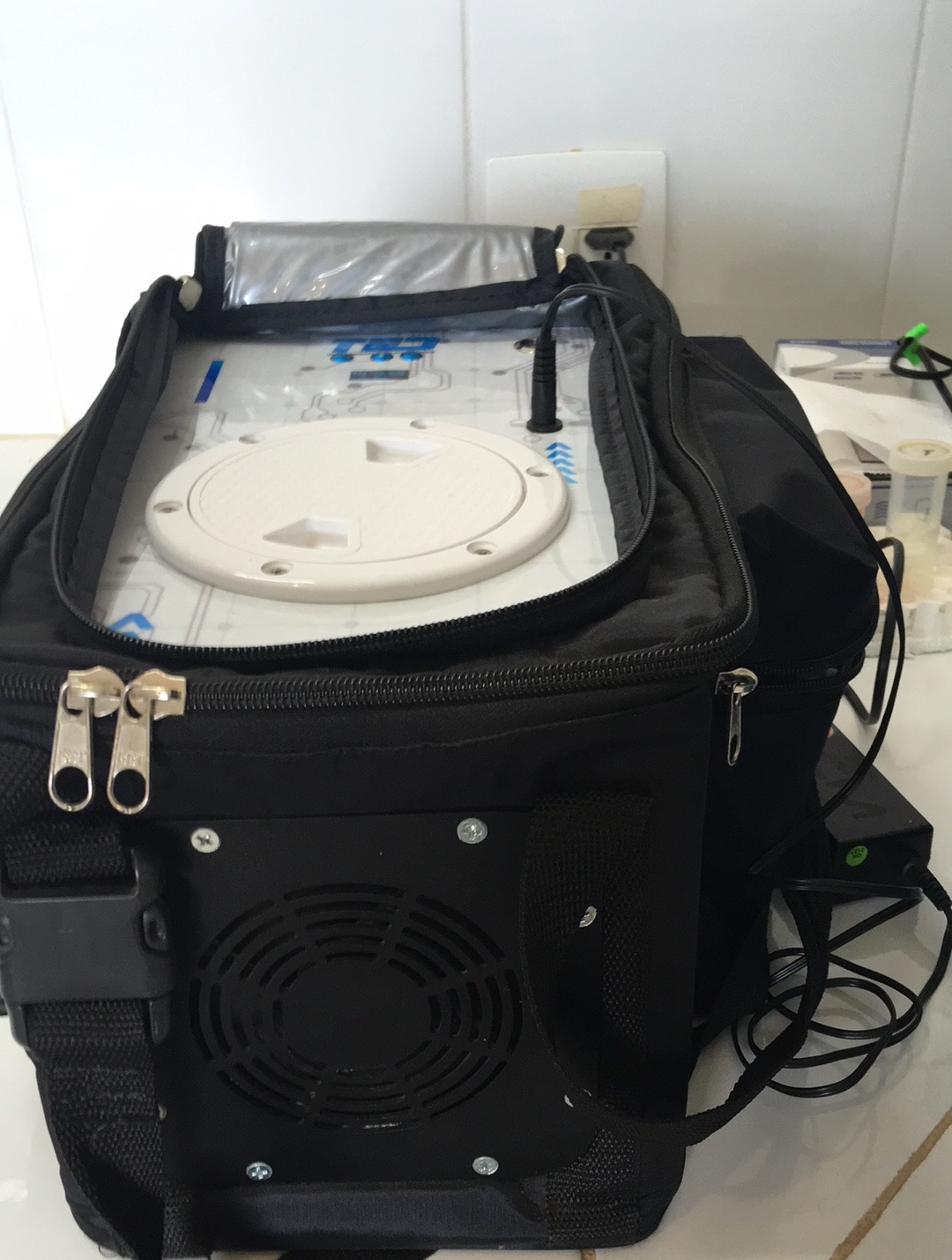
The laboratory
Oocytes are maintained in a temperature-controlled culture medium for transfer to the laboratory. Your mare is already back home with you.
- The following day
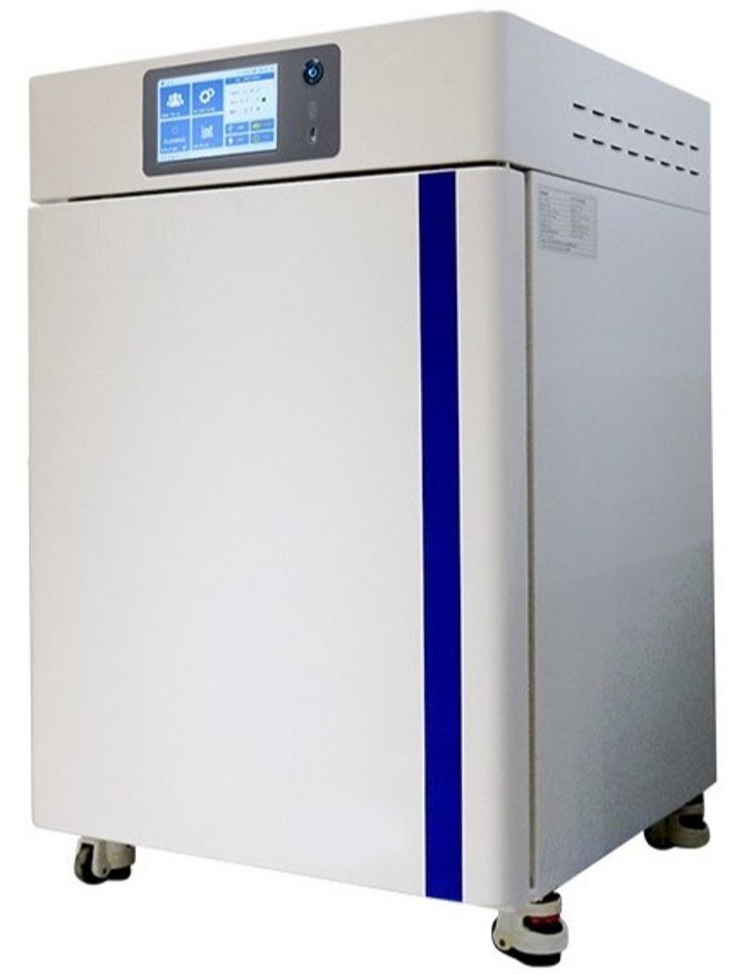
Maturation
About twenty hours in an incubator at the laboratory. We then know how many oocytes have reached metaphase II, meaning which ones are ready to be fertilised.
- "Day zero"
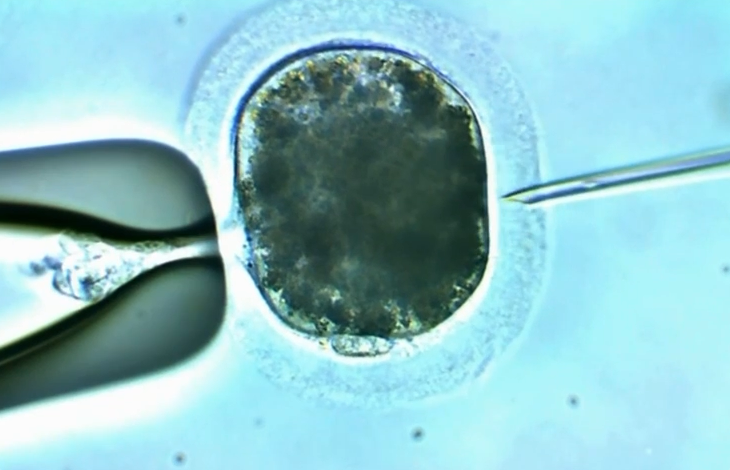
Injection
A single sperm cell is injected into each mature oocyte using a micromanipulator. It is from this day zero that the timeline counter begins.
- Four days after injection
Cleavage
Embryos that have divided are identified. The others stop there. This is the first real indicator of what the session will yield.
- Seven to ten days later
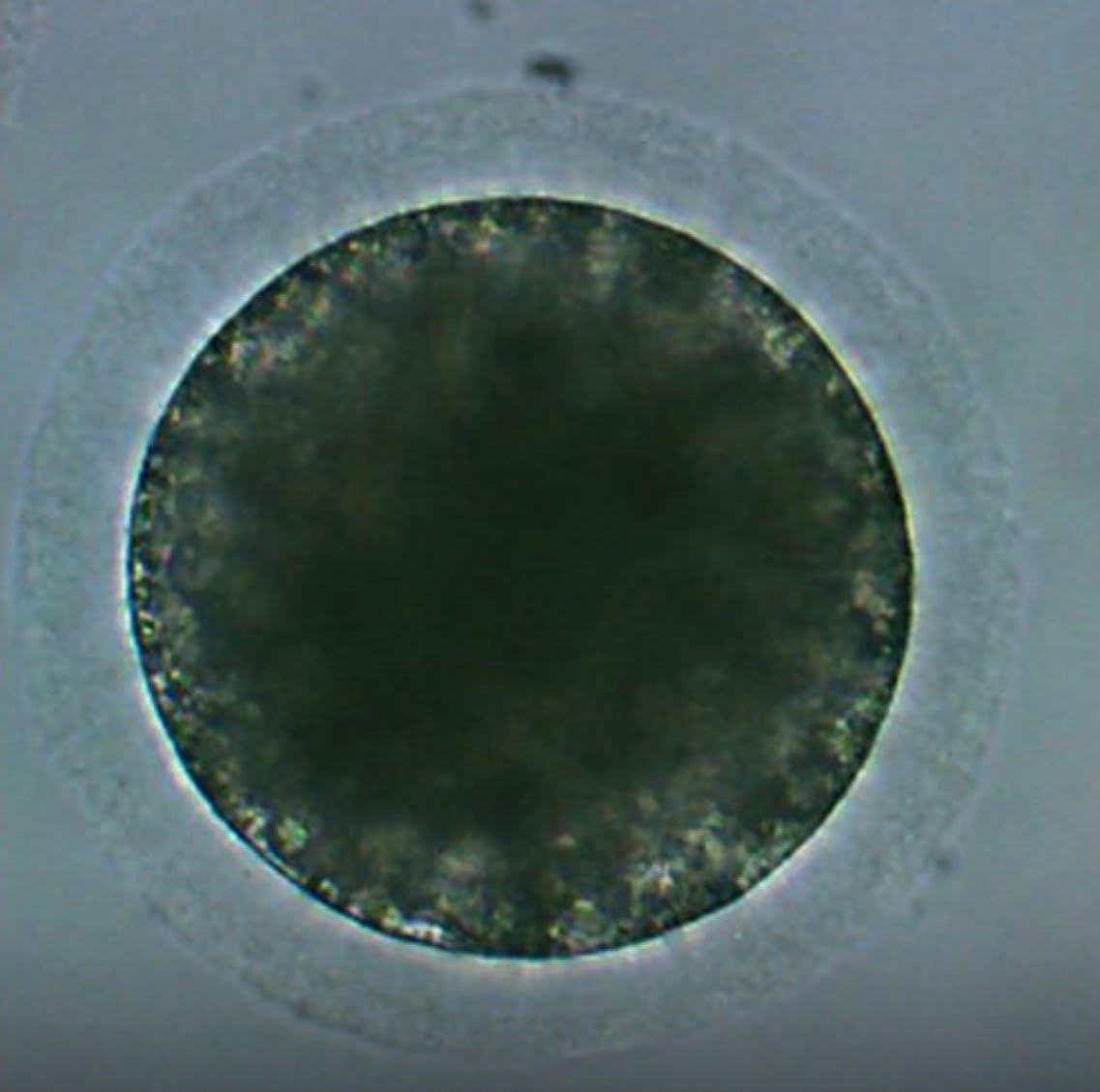
The blastocyst
Embryos develop at their own pace. As soon as an embryo reaches the blastocyst stage, it is frozen on the exact same day at minus 196 degrees.
What you can reasonably expect
This is the question everyone asks, and it deserves an answer in figures rather than a promise.
In the large published series, a session yields on average a little over two freezable embryos. The spread is wide. Some mares give none, others five, six, sometimes more. Around eight sessions out of ten produce at least one embryo.
What makes this figure vary depends first on the mare. The stallion effect exists but is more modest, and it is hard to predict, since post-thaw motility is not predictive of how semen will behave in ICSI. Examining her ovaries beforehand lets us estimate her follicular potential, and therefore tell you what to expect before you commit to anything.
OPU and ICSI in figures
From aspiration to frozen embryo
A session generally involves the aspiration of twenty to twenty-five follicles, allowing a little over half to be recovered as oocytes. Each subsequent step in the process results in a further loss of material.
| Step | Observations |
| Aspirated follicles per session | 21 to 26 on average, ranging from 8 to 45 |
| Recovered oocytes per session | 12 to 14 on average, ranging from 2 to 27 |
| Recovery rate | 53 to 54 % |
| Oocytes reaching metaphase II | approx. 60 % |
| Injected oocytes yielding a blastocyst | 20 to 30 % |
| Harvested oocytes yielding a blastocyst | approx. 16 % |
| Freezable embryos per session | 1.9 to 2.2 depending on the series, ranging from 0 to 13 |
| Sessions producing at least one embryo | 78 to 83 % |
And after freezing
The transfer of a thawed embryo results in a pregnancy in just over three-quarters of cases. Approximately six out of ten transferred embryos lead to a live-born foal.
Factors affecting these figures
The mare has a greater impact than the stallion. In a series of 552 sessions involving 323 mares, fourteen out of sixteen stallions ranged between 15.6 % and 26.8 % blastocysts per injected oocyte, a much narrower distribution than that observed between mares.
Post-thaw semen motility does not predict ICSI outcomes. A stallion with poor frozen semen quality can perform very well, as only a single intact sperm cell is required per oocyte.
The number of recovered oocytes is the best indicator available before starting. This is why we examine your mare's ovaries before suggesting a session.
A mare that produced an embryo in her first session succeeds again in 77 % of cases. A mare that produced none fails again in 62 % of cases, which we take into account before offering a second attempt.
Where do these figures come from?
Cuervo-Arango J, Claes AN, Stout TAE. Mare and stallion effects on blastocyst production in a commercial equine ovum pick-up–intracytoplasmic sperm injection program. Reproduction, Fertility and Development 2019;31(12):1894-1903.
Claes A, Stout TAE. Success rate in a clinical equine in vitro embryo production program. Theriogenology 2022;187:215-218.
Scarlet D, Schuler G, Malama E, Bollwein H, Bocci C, Colleoni S, Lazzari G, Galli C, Kowalewski MP. Endocrine profile and OPU-ICSI outcomes in mares: a comparative study. Reproduction and Fertility 2025;6(3):e250027.
Cuervo-Arango J, Sala-Ayala L, Márquez-Moya A, Martínez-Boví R. The influence of aspiration pressure, follicle flushing method and needle rotation during single-operator OPU technique on oocyte recovery and embryo production in the mare. Animals 2025;15(6):832.
These values are derived from international studies covering several thousand sessions, across all breeds and laboratories combined. They provide a general order of magnitude, nothing more. We will publish our own figures once we have accumulated enough data for them to be meaningful.
Frequently asked questions
Is it painful for my mare?
No. She is sedated, standing in the stocks, and the procedure is well tolerated. The protocol also includes medication to relax her and limit straining during the aspiration.
Are there any risks?
As with any medical procedure, yes, but they remain low. The primary risks would be an infection or bleeding in the abdominal cavity. We monitor the mare before and after, and we administer a preventive treatment.
How often can we repeat the procedure?
Every two to three weeks. This is one of the major advantages of the technique. A mare can undergo multiple sessions in a row during the same period without suffering.
Is there an age limit?
No strict limit. The yield declines with age, and more noticeably after twenty, but we regularly obtain embryos from mares from which no one expected a foal anymore.
What if no embryo is obtained?
This happens in about one out of five sessions. The work has been done, so the aspiration and laboratory fees remain due. However, we apply a discount to the next session. Sharing this risk seems only fair to us.
If the first session yields nothing, should we try again?
Often yes, but not always. A mare that produced an embryo the first time has about a three-in-four chance of doing so again. A mare that produced none has a more guarded prognosis. We will discuss this with you before launching a new attempt.
Can I keep my mare at home between sessions?
Yes. She comes in for the procedure, for example in the morning, and leaves the same evening.
How long can an embryo be stored?
Indefinitely, as long as the liquid nitrogen is maintained. You decide when the transfer takes place.
Which stallions can I use?
Most of those available in frozen semen. Some are even only accessible via ICSI, because there is not enough left for a conventional insemination. Tell us about your plans, and we will check for you.
Can I use my own mare as a recipient?
Yes, and many breeders prefer to do so. In fact, this is where freezing truly makes sense. Since the embryo waits, there is no need for synchronisation. We monitor your recipient mare and perform the transfer on the day she reaches the exact right stage of her cycle.
What it costs
You pay for an aspiration session, the laboratory work, and then an amount for each embryo actually frozen. Transfer into a recipient mare is invoiced later, on the day you decide to use the embryo.
For an average mare, expect somewhere between 1500 and 1600 euros per frozen embryo. A generous session brings that figure below 1000 euros, a poor one pushes it up. It is your mare's yield that sets the price, not a unit tariff.
The breakdown item by item is on our pricing page.
Is your mare a good candidate?
We are happy to talk it through with you, with no obligation. A preliminary examination lets us assess her ovaries and give you a realistic idea of what can be expected.