We monitor your mare through her heat, choose the moment of insemination and confirm pregnancy from day fourteen. She can stay at the centre or go home between examinations.
The method is the same for every mare. The pace of examinations, the treatments and the timing of insemination, however, are decided mare by mare. That is where the success of a cycle is won.
Before you come
Upcoming changes
Giguellerie 32, 5640 Maison-Saint-Gérard · Directions · All opening hours
Does your mare need to stay at the centre?
No. If you live within a reasonable distance, bring your mare on the day of each examination and take her home afterwards. A mare is better off in her field than shut in a box, and a relaxed animal is easier to monitor. At each visit we tell you when the next examination will be.
If travelling is not possible, your mare stays at the centre for the duration of her heat, and livery is charged per day.
Boarding at the centre is covered by article 7.1 of our general terms and conditions.
When does the season start?
In winter, most mares stop cycling. This is seasonal anoestrus, governed by day length. In spring they go through a transition period of long, irregular heats that rarely end in ovulation. We start monitoring once this transition is over and the cycles become reliable again.
Some breeders bring the season forward by putting their mares under lights. It matters just as much to respect darkness in autumn. Without artificial light in the morning and evening until December, the mare follows the rhythm of the seasons, and her return to activity in spring stays predictable.
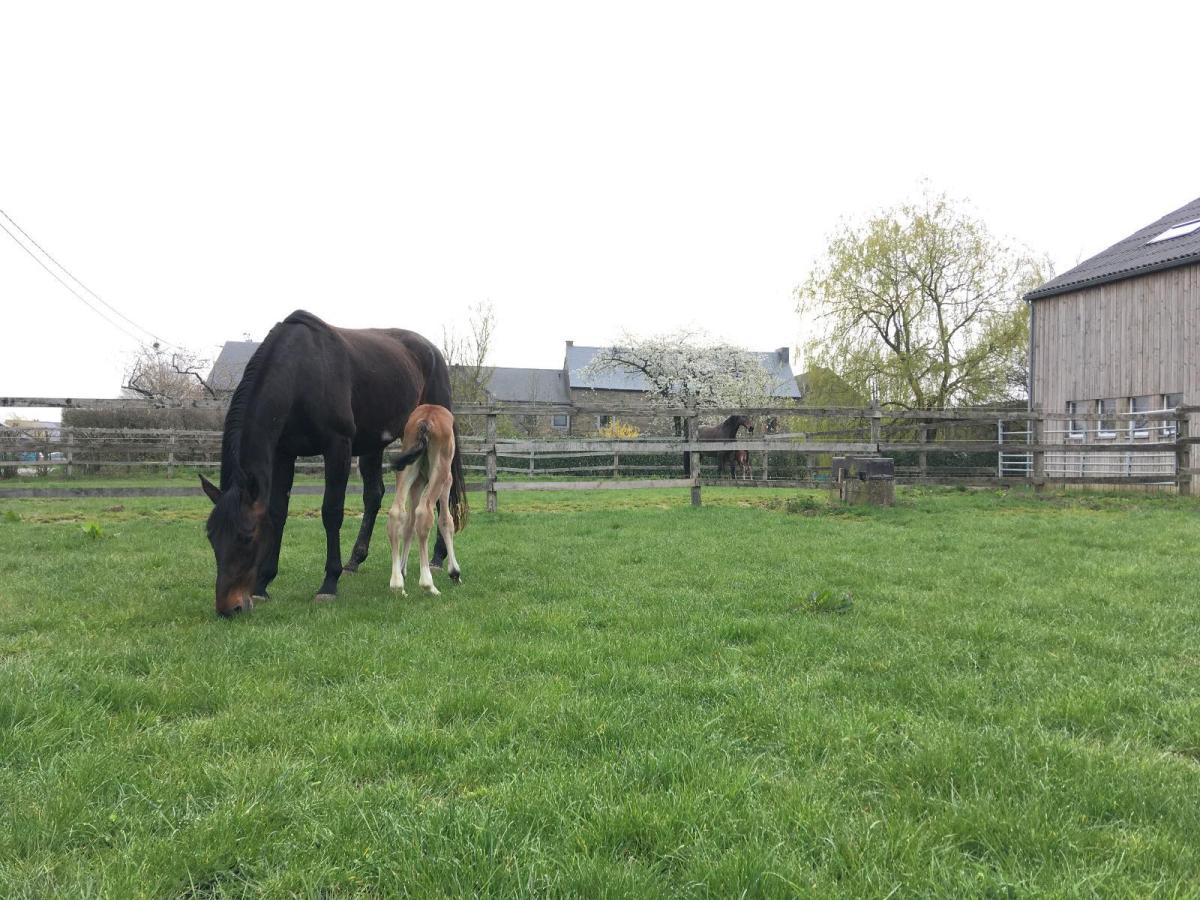
A mare that has just foaled can be inseminated on her foal heat, about ten days after birth, if the uterine examination allows it.
How does a cycle unfold?
The stages of a cycle
- Start of heatThe first examination. With ultrasound we place your mare in her cycle. We examine her ovaries, her uterus and the conformation of her vulva, on which the protection of the uterus against infection from outside depends.
- Until ovulationThe heat. We follow the growth of the follicle, the fluid-filled sac in which the egg matures, and the oedema of the uterus, which tells us ovulation is approaching. Examinations become more frequent as ovulation nears.
- Around ovulationInsemination. With fresh or chilled semen, it takes place before ovulation. With frozen semen, usually just after.
- After inseminationThe check. We confirm that ovulation has occurred and that the uterus is not holding fluid. If it is, we treat it straight away.
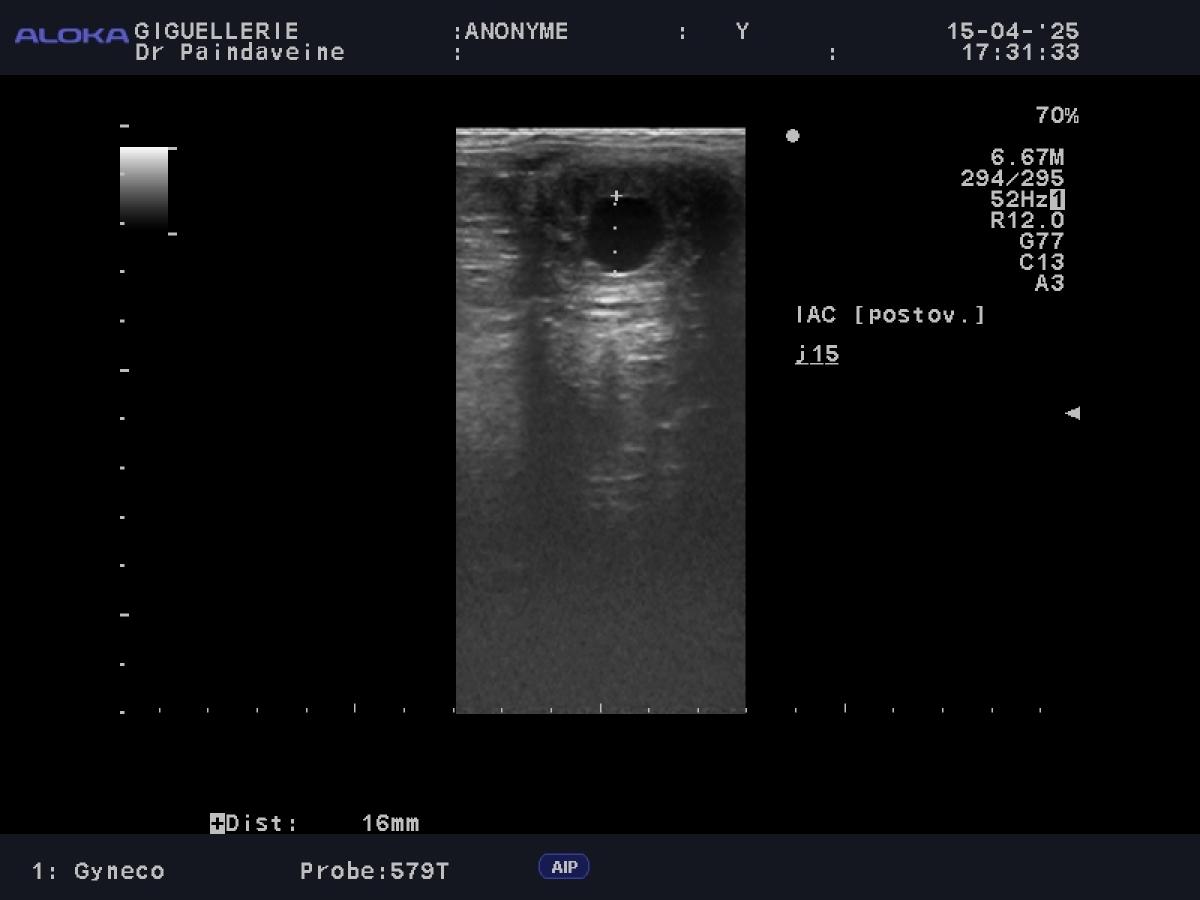
- Days 14 to 18, then 25 to 30The pregnancy scan. Ultrasound shows the embryonic vesicle. A second scan confirms that the foetal heart is beating.
What changes with frozen semen?
After insemination, sperm do not linger in the uterus. Research on sperm transport shows that within four hours the fittest have reached the oviduct, the tube where fertilisation takes place. There they attach to the wall and can wait several days for the egg. The rest are cleared with the uterine fluid.
Freezing damages the sperm membrane. Frozen-thawed sperm attach less well to the oviduct wall and survive far less long in the mare's reproductive tract. Insemination must therefore fall as close as possible to ovulation, ideally within four to six hours after it. To achieve this, we increase the number of examinations as ovulation approaches. Monitoring with frozen semen thus involves many more examinations, and much more availability, than with fresh semen.
We place frozen semen at the tip of the uterine horn, on the side of ovulation, most often in the hours that follow it. This deep insemination allows small volumes to be used, making the most of rare or costly straws.
Where does the semen come from?
From all over the world. We can order the doses for you from the stallion's centre. You can also order them yourself and have them delivered to our centre, approved under number BF 10/01. We store your straws free of charge for the season, then under the terms of long-term storage.
We examine the semen under the microscope before insemination. If there is any doubt about its quality, we have a computer-assisted analyser, CASA, which measures the concentration and motility of each sperm cell.
What if the mare does not get in foal?
Several causes are possible, and ultrasound often helps tell them apart. One of the most common is endometritis, an inflammation of the uterine lining. Every insemination triggers a brief inflammatory reaction, which a healthy mare clears within a few hours. In some mares, often older ones or those that have had many foals, the uterus drains poorly, and the fluid left behind makes it hostile to the embryo.
These mares can be identified on ultrasound, and treated. Depending on the case, we lavage the uterus after insemination or give oxytocin, the hormone that makes the uterus contract and helps it empty. The next cycle is then planned in the light of what the previous one taught us.
A mare with a healthy uterus may also stay empty because her oviduct no longer lets the gametes through. Gelatinous masses form there with age and can block it, particularly in mares that have not produced an embryo for a long time. We can then apply a drug from the prostaglandin family, such as misoprostol, in contact with the oviduct to help clear it.
The stallion's fertility also plays a part. Semen of average quality calls for even more precise insemination, and we adapt the protocol accordingly.
The protocol in detail
The pace of ultrasound examinations depends on the stage of heat and the type of semen. They are spaced out early in the heat. With frozen semen, we increase the number of examinations as ovulation approaches, in order to inseminate within four to six hours after it. The semen is placed in a small volume at the tip of the uterine horn, on the side of ovulation.
Prices
The package covers a complete cycle, with the repeated examinations, the inseminations and the first pregnancy scan. It is lower with fresh or chilled semen than with frozen semen, whose insemination requires more examinations. Medication, semen transport and livery, if your mare stays at the centre, are extra.
| One cycle, insemination with fresh or chilled semen | 159,53 € | Includes repeated gynaecological examinations, inseminations and the first pregnancy check between 14 and 18 days. Medication and any minor surgery are charged extra. |
| One cycle, insemination with frozen semen | 212,70 € | Includes repeated gynaecological examinations, inseminations and the first pregnancy check between 14 and 18 days. Medication and any minor surgery are charged extra. |
| Semen transport | at your expense | Paid directly by you, or re-invoiced on receipt. |
| Gynaecological examination | 33,23 € | Standard gynaecological examination, outside the package. |
| Pregnancy diagnosis | 33,23 € | Additional pregnancy diagnosis. |
| Specialised gynaecological examination | 66,47 € | For example embryo sexing, transabdominal or transrectal fetal assessment. |
Frequently asked questions
How often do I need to come during a heat?
It depends on the stage of heat and the type of semen. We set each appointment at the previous examination. With frozen semen, visits become more frequent as ovulation approaches.
Does my mare need to be tested before insemination?
Not as a rule. A healthy mare only needs the gynaecological examination carried out at the start of monitoring. If the stallion's contract requires a specific sample, we take it.
When will I know if my mare is in foal?
Between the fourteenth and eighteenth day after ovulation, by ultrasound. This first pregnancy scan is included in the package. A second scan, around day twenty-five or thirty, confirms the foetal heartbeat.
What if my mare is carrying twins?
A twin pregnancy almost always ends badly, in abortion or the birth of two weak foals. We look for twins from the first scan, but a single examination is not always enough. When the two ovulations are a few days apart, the second vesicle may measure eight millimetres while the first measures twenty. On day fourteen it is sometimes still invisible. We therefore repeat the examination whenever there is doubt. When we find twins, we crush the extra vesicle with gentle pressure through the rectal wall, preferably before the embryos become fixed in the uterus, around day sixteen. In most cases, the other embryo then continues to develop normally. That is the aim of the procedure, though it cannot be guaranteed.
Do you analyse every dose of semen?
We examine the semen under the microscope before insemination. We do not thaw an extra straw just to analyse it, but if a batch is in doubt, our CASA analyser measures its quality precisely.
Can you store my straws?
Yes. Have them delivered to our approved centre BF 10/01. Storage is free for the season, then subject to a storage contract.
Can my mare be inseminated on her foal heat?
Yes, if the uterine examination shows that she has recovered sufficiently from the birth. If not, we wait for the next heat.
Can my sport mare keep competing?
Yes. When a treatment is needed, we tell you the withdrawal period to respect under FEI rules before she competes again.
Does your mare need to be inseminated this season?
Call us from her first heats, or earlier if you have already chosen the stallion.


