
Artificial insemination, with chilled or frozen semen, has deeply changed horse breeding in Belgium. Semen now travels everywhere, and breeders no longer have to choose the neighbour's stallion simply because it is convenient. They can use the best bloodlines from Europe and beyond.
Too much information makes the choice harder
Catalogues, magazines, social media and stallion shows put a huge amount of information within the breeder's reach. It helps to compare performance and bloodlines. It can also mislead breeders who have not decided what they are looking for.
Everything starts with assessing the mare
Before opening a catalogue, look at your mare with a clear eye. Temperament, conformation, type, colour and athletic ability all count, but the key is to know what foal you want to breed, and for which market.
What are her strengths? Where are her weaknesses, in size, in character or in her limb angles, that is the length and position of the bones of her legs? This assessment guides the choice of a stallion who will strengthen her qualities without repeating her faults.
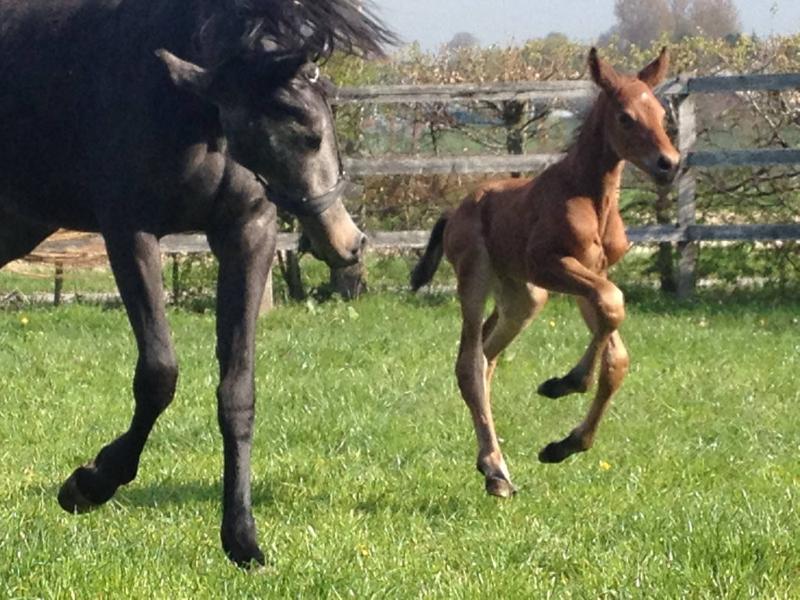
Two extremes do not make an average
A common mistake is to think that mixing hot and cold water will give you warm water. A mare with a hock that is too straight, crossed with a stallion with a hock that is too angled, will not necessarily give an angle in between. Genetics does not always average out, and the foal may inherit one of the two extremes.
Nor should you overlook a major fault in the stallion because the mare is very good in that area. A mare with an easy temperament does not make up for a difficult stallion, even one with great ability. If temperament matters to you, do not compromise on it.
We would rather advise choosing a stallion who shares the mare's qualities, when these qualities are central to your plan. They are then much more likely to appear in the foal. Make a list of stallions who meet your criteria, then look at their faults, and rule out all those with the same weaknesses as your mare.
The mare matters more, because she is harder to choose
It is often said that the mare matters more than the stallion because she passes on a larger share of her genes. The reality is more nuanced. Above all, it is much easier to choose the wrong mare than the wrong stallion. Every breeder has access to the best stallions in the world, while an excellent broodmare is rare and hard to acquire.
Embryo transfer has opened another way: today you can start breeding by buying an embryo from an elite mare. If the dam is not good enough, even the best stallion will not give a good foal. It is better to look critically at your own mare than to hesitate for months between the stallions in fashion.
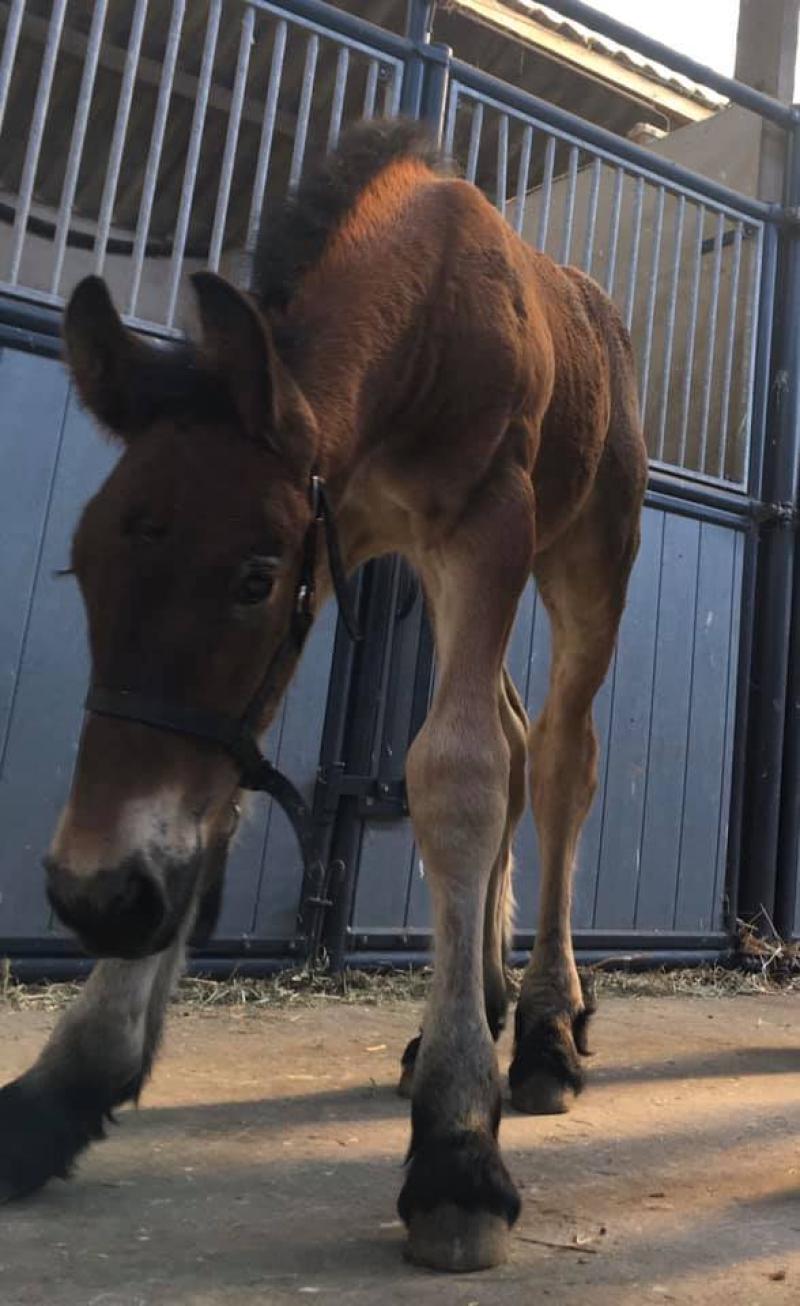
The market and the studbooks also guide the choice
Pedigree carries a lot of weight when the foal is bred for sale. A sought-after stallion or a well-known sire line makes it more attractive, especially at auction. Choosing a promising young stallion can also be wise, before his value rises.
Finally, studbooks protect the breeder. They set selection criteria for conformation, health and performance. Approving a stallion requires veterinary examinations (X-rays, endoscopy, lameness examination, semen evaluation) that rule out congenital conditions and check fertility. Requirements vary from one studbook to another, and their opinions help breeders choose safely.