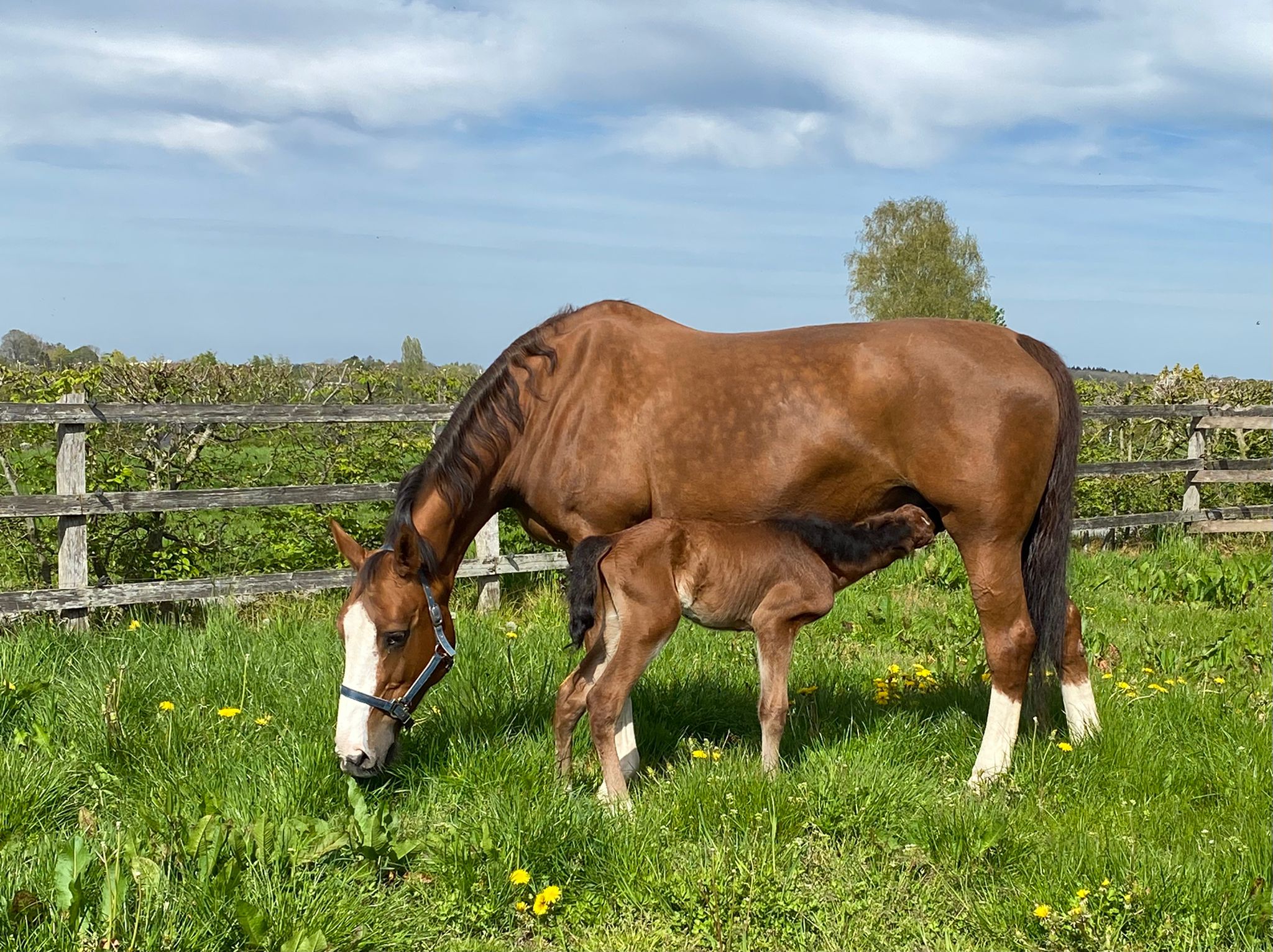
Foaling is the culmination of an eleven-month wait. While most mares give birth without assistance, rapid intervention remains the key factor for the foal's survival and the mother's health.
Gestation Length: Forget the Calendar
The average duration is 340 days, but individual variation is enormous. A birth at 320 days can produce a viable foal, just as a wait well exceeding eleven months is not uncommon. At La Giguellerie, our record is a gestation of 402 days: the foal was born perfectly normal, just a bit "hairier" than average. One should not rely solely on dates: it is the maturity of the fetus that triggers the signal, not the theoretical date.
Predicting D-Day: Breeder's "Tips & Tricks"
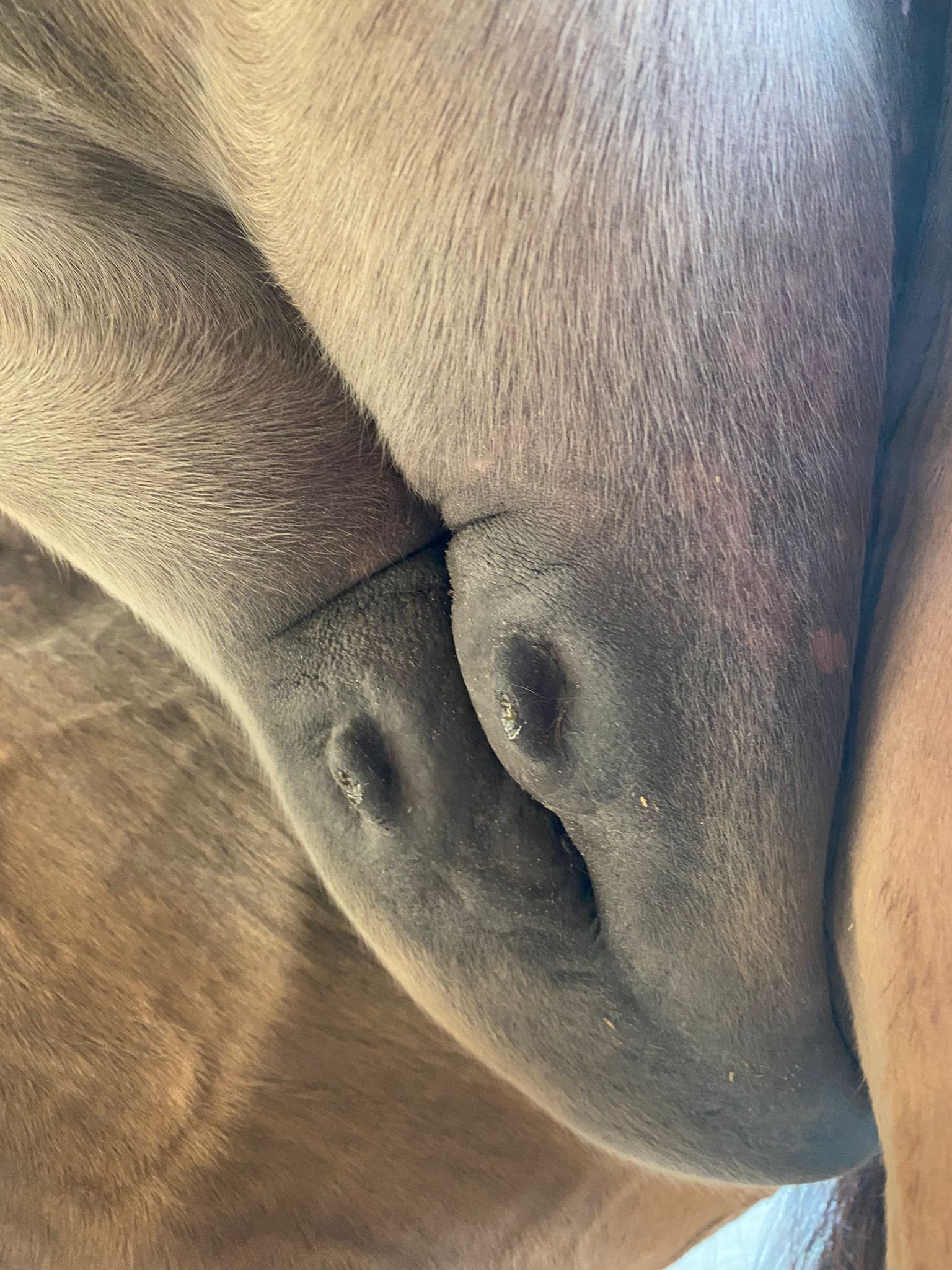
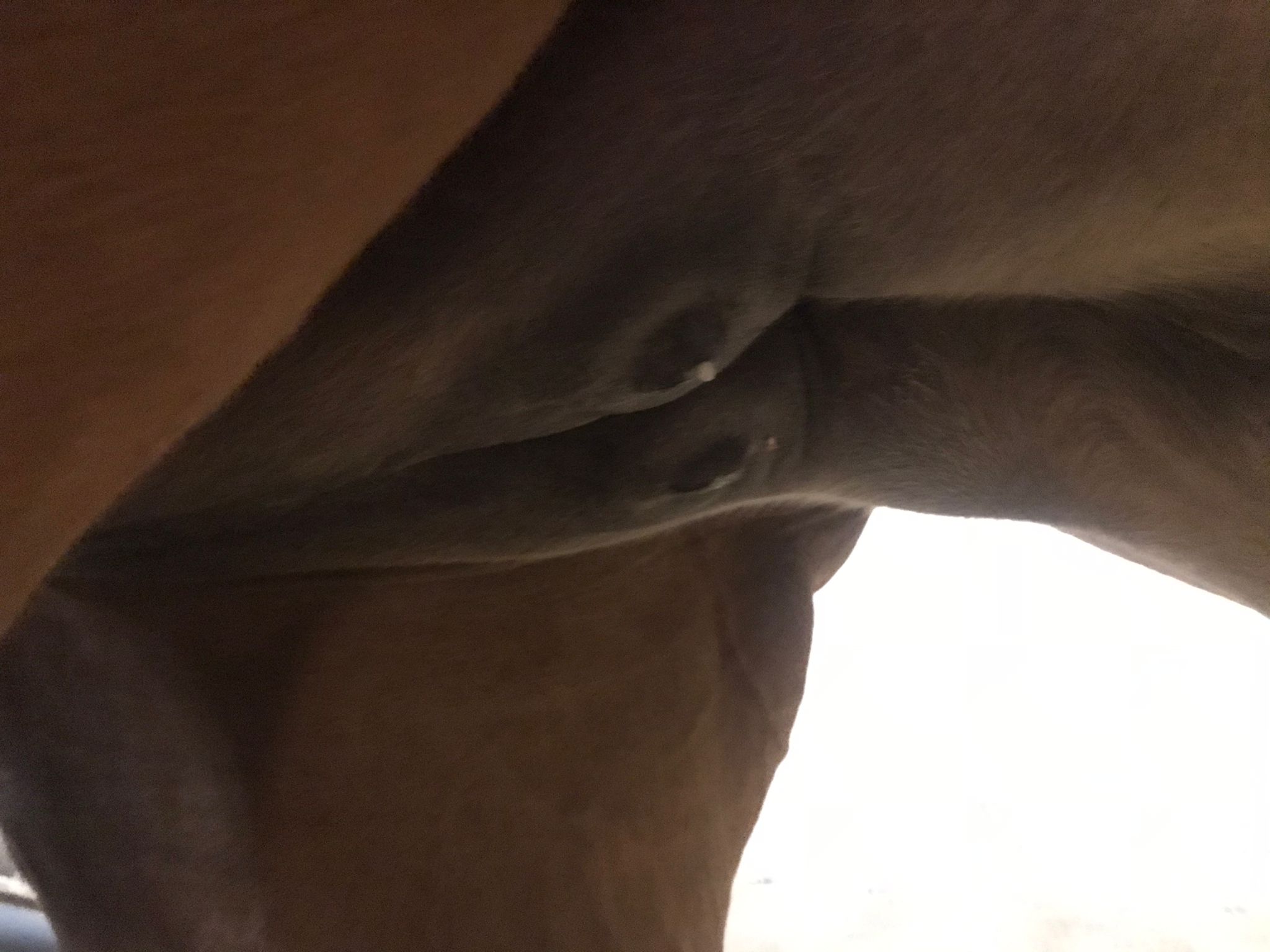
To monitor your mare at home, visual observation is the foundation: changes in appetite, nervousness, the vulva relaxing and becoming redder, or the appearance of wax "candles" on the teats. However, to avoid spending nights in the stall unnecessarily, biological monitoring of pre-colostrum is the most reliable tool.
Effective DIY Methods
You don't need a laboratory. Standard indicator strips (like pool or aquarium tests) work very well, provided you choose the right ones:
- For pH: Use "narrow range" strips (for example, 5.5 to 8.0) for better precision.
- For Calcium: Use "water hardness" (TH) tests. Then simply convert the degrees to ppm or mg/dL to track the rise in calcium.
Protocol to Follow
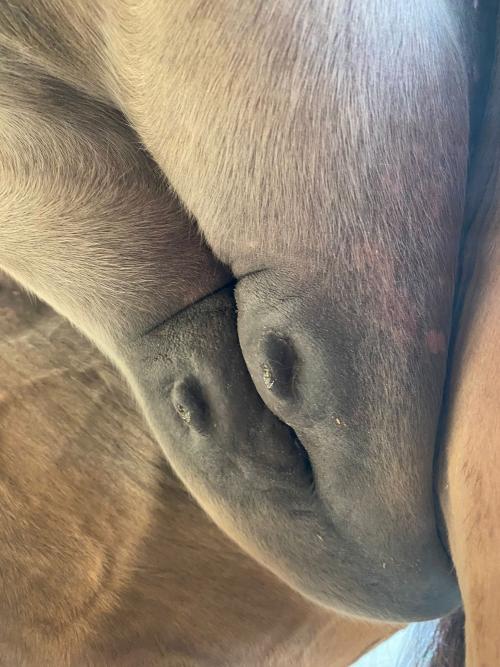
- Test the pH every evening: As long as it is above 7.0, you can sleep.
- Watch for the drop: As soon as it falls below 6.4, foaling is approaching (often within 24-48 hours).
- Check Calcium: If your hardness test shows a sharp rise (above 300-400 ppm) combined with a low pH, foaling is due that night.
Technical Note: Ca++ can also increase during fetal distress. Veterinarians sometimes use the Sodium/Potassium (Na/K) ratio to confirm imminence if in doubt, but this measurement requires a specific ion analyzer, not achievable with simple home strips.
The Welcome Assessment
At La Giguellerie, monitoring begins before the first contractions. Upon the mare's arrival, we perform an initial ultrasound assessment. The idea is not to over-medicalize, but to calmly objectify what is happening inside to be better prepared.
This examination allows us to check:
- Fetal vitality: We measure heart rate and movement to ensure the foal is in top shape.
- Position: We ensure the foal is already well-oriented for its future passage.
- Placental health: Specifically assessing the Combined Thickness of the Uterus and Placenta (CTUP), any potential placental detachment, and the risk of "red-bag" delivery...
This welcome assessment is essential: it allows us to identify without stress the mares that will need more specific attention when the time comes.
Risks and Field Reality
Monitoring is not a lack of trust in nature, but security against unpredictable accidents. Assistance allows for the immediate management of:

- Mechanical complications: Dystocia (malpresentation) can block labor. Without help, the risk of internal hemorrhage, uterine prolapse (the uterus protruding), or tearing is real.
- Newborn emergencies: A foal can be born with a ruptured bladder or rib fractures. It may also present Neonatal Maladjustment Syndrome.
- The afterbirth: If the placenta is not expelled (retained) within three hours, the mare risks serious infection or laminitis.
Technology at the Service of Birth
Foaling at home is a magnificent experience, but it is also an exhausting physical challenge. At La Giguellerie, we secure this moment using transmitter-magnet alert systems.
The principle is simple and reliable: a small device is attached to the mare's vulva with two very light stitches. As soon as labor begins and the vulva dilates, the magnet detaches, instantly triggering a priority phone call to our mobiles. This system allows us to be at the mare's side within minutes of the start of expulsion.
By entrusting your mare to us, you give yourself peace of mind. You avoid the fatigue of sleepless nights and the stress of the unexpected, focusing only on the essential: meeting your foal once a safe birth is guaranteed.